
Pressed Candy OEM Formulation Design: Excipient Framework, Flow Properties and Taste Balance
Formulation is the step most often treated as a formality in pressed candy projects. Brand owners tend to assume the recipe is the actives blended at the right ratio and that everything beyond that is the machine's problem. On the factory floor, the formulation decides three things: whether the powder fills the die consistently, whether the tablet survives packaging and distribution, and what the consumer actually experiences in the mouth. Those three pull against each other. Formulation work is the search for a balance that still runs at commercial press speed.
1. Start with the actives: the loading sets the room you have
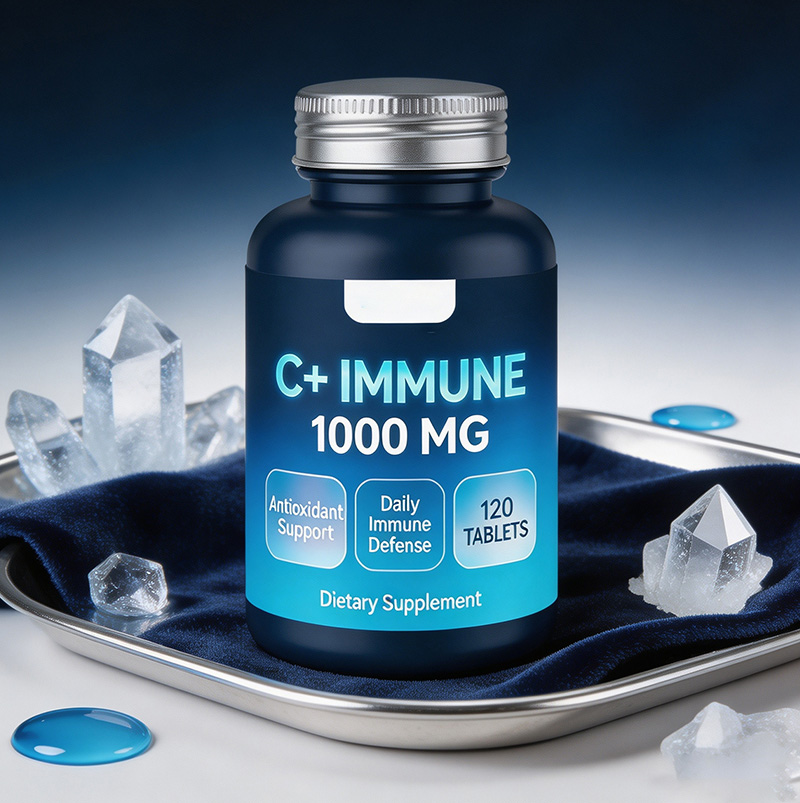
The first decision is not which excipients to use but how much of the formula the actives occupy. Below about ten percent loading, the excipient system has room to move and compressibility is usually easy to stabilise. Between thirty and fifty percent, the excipient portfolio narrows sharply and flow and binding become the live issues. Above sixty percent you are essentially compressing the raw material itself, and its particle properties - particle size distribution, bulk density, moisture, flow - determine whether the project is feasible at all.
Problems tend to surface right here. A spray-dried active with a bulk density of 0.2 to 0.3 grams per millilitre will not fill a die cavity reliably, and weight variation follows. There are three standard remedies: granulate the active to raise bulk density, use a dense filler such as dicalcium phosphate or microcrystalline cellulose to lift the blend, or move to a larger punch to reduce the required fill depth. All three need to be assessed during sampling, not discovered at commercial scale.
2. The excipient framework: four functional layers
Fillers supply bulk and baseline compressibility. Microcrystalline cellulose is the most versatile because it also binds. Mannitol and sorbitol give a cooling, non-hygroscopic profile suited to lozenges and sugar-free work, at higher cost and with compressibility that is sensitive to grade.
Binders hold granules together and create bonding under pressure - povidone, hypromellose, starch paste, pregelatinised starch. Binder level trades directly against disintegration: more binder means harder tablets and slower breakdown.
Disintegrants - croscarmellose sodium, crospovidone, sodium starch glycolate - work by swelling. Their level and where they are added (intragranular, extragranular, or split) drive disintegration time, and split addition is the usual answer when fast release matters.
Lubricants reduce friction against the tooling. Magnesium stearate is standard, but it is hydrophobic: too much of it, or too long a blending time, coats particles and slows both disintegration and hardness development. The working range is roughly 0.5 to 1 percent with a final blend of three to five minutes.
3. Flow and compaction: measure, do not guess
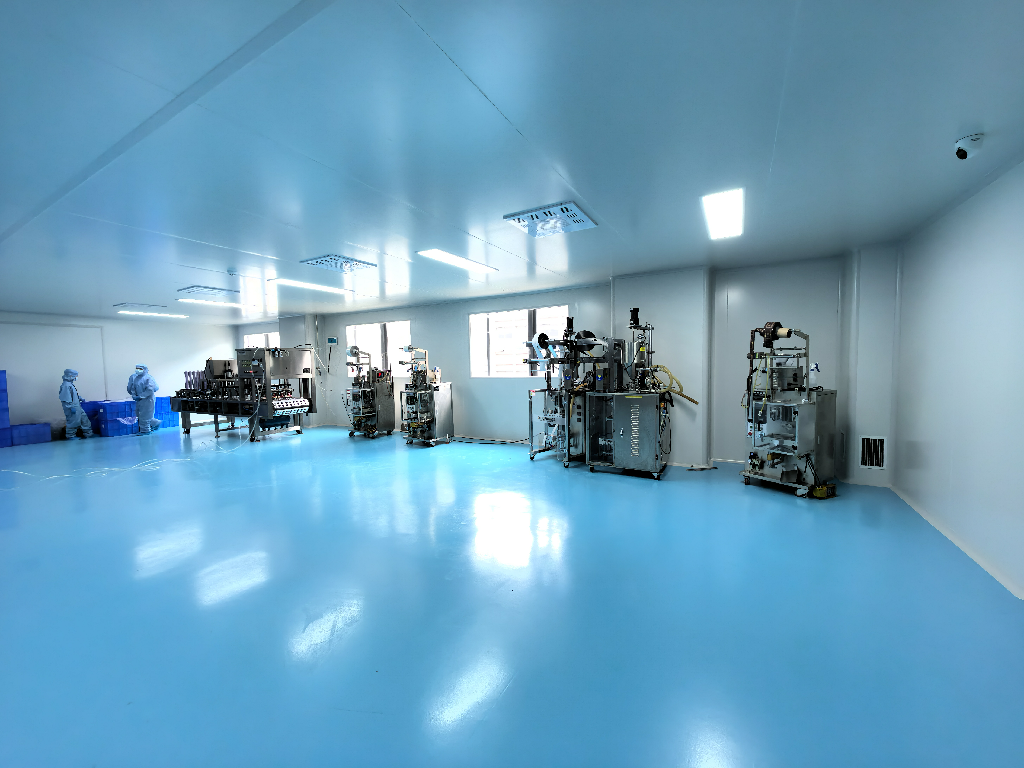
Scale-up stability comes down to a handful of measurable powder properties. Angle of repose describes how freely a blend flows; under 40 degrees is generally workable and past 45 the die filling becomes visibly unstable. Carr's index, derived from bulk and tapped density, is normally kept under 25 percent; beyond 30 the blend is classified as poor flowing.
Compressibility is assessed with a hardness-versus-pressure profile. Tablets are compressed at several main compression forces and hardness and friability are recorded to identify the window where both pass. A wide window survives normal production noise - humidity drift, granule batch variation. A narrow one means rejects as soon as anything moves.
Moisture is the parameter most often overlooked. Too dry and tablets cap or laminate; too wet and they pick and stick, and the storage risk shifts to softening and mould. Most pressed candy formulations sit somewhere between two and four percent, and the exact figure has to be established from a drying curve during sampling.
4. Three different products behind one word
A lozenge is designed to dissolve slowly and carry flavour, built on sorbitol or mannitol with modest flavour and cooling agents, compressed hard, with no strong disintegrant. A swallow tablet is the opposite: disintegration drives the design, diameter is held to roughly eight to eleven millimetres, and a film coat usually masks off-notes and eases swallowing. A chewable has to break cleanly without grit, which means tight control of granule size and deliberately lower hardness.
5. Reading the common defects
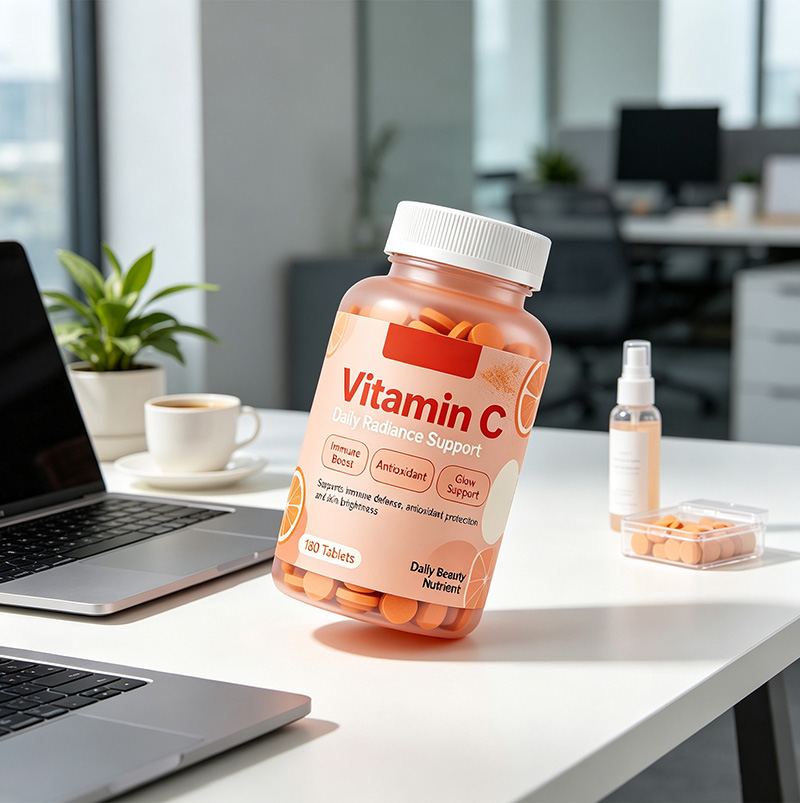
Sticking and picking usually point to high granule moisture, insufficient or poorly distributed lubricant, or worn punch faces. Capping and lamination point to excess fines, over-dry granules, insufficient binder or excessive compression force. Weight variation is a filling problem - poor flow, wide particle size distribution, or a mismatch between feeder speed and fill depth. Failed disintegration is typically over-lubrication, over-compression, or the wrong disintegrant added the wrong way.
6. What to ask for at sampling
Ask the plant to report angle of repose and Carr's index, granule moisture and particle size distribution, the hardness-pressure profile, measured weight variation, friability and disintegration time, plus appearance and assay stability under accelerated conditions. That set of numbers is the formulation file you will validate against for every subsequent batch.
For brand owners, formulation in pressed candy OEM is not a one-off deliverable. It is a reproducible set of process parameters, and locking them down early is what makes later batches predictable.
Related Products
Glycerol diester coffee OEM OEM OEM OEM OEM meal replacement coffee MCT live broadcast same solid beverage source manufacturer | GLP-1 Semaglutide Satiety & Fat Blocker Tablets | Custom Pressed Candy OEM Manufacturing
About Guangzhou Mesen Health Biotechnology Co., Ltd
Guangzhou Mesen Health Biotechnology Co., Ltd is located in the Huashan Science and Technology Park, Huadu District, Guangzhou. The company has focused on OEM and ODM services for the big health industry for nearly 20 years, operating dedicated research, production, sales and management centres, and maintaining long-term strategic partnerships with well-known Chinese medicine colleges and research institutions. Capabilities span pressed candy, gummies, capsules, solid beverages, herbal teas, plant beverages, protein powders, dietary supplements and enzyme jelly - from formulation development through contract manufacturing. For details on minimum order quantities, sampling lead times and quotations, see our manufacturing advantages and product range, or contact us for a tailored proposal.
Further Reading




