
Herbal Tea OEM Raw Material Sourcing: Origin, Seasonality, Price Volatility and Locking Supply
Herbal tea carries the highest raw material share of any format, typically fifty to seventy per cent of total cost, and its flower and fruit inputs are acutely sensitive to origin and season. The same formula can cost twenty per cent more in the second half of a year than the first, and a failed harvest in a producing region can double it. For a brand that volatility shows up as a quotation that will not hold, usually without any explanation of where it came from or whether it could have been anticipated. Understanding how the ingredient market behaves is the precondition for controlling cost in this category.
1. Three drivers of volatility
Price is set by three variables. Origin concentration comes first: many flowers, herbs and fruits grow in a handful of counties, sometimes a handful of townships, so a late frost, prolonged rain or drought in one place moves the national price immediately. Harvest season is second: flower materials are typically gathered once or twice a year, and the gap between old-crop and new-crop pricing is substantial, while fruits and roots store better but differ noticeably from new crop in colour, aroma compounds and extraction yield. Grade segmentation is third: one material is sorted by wholeness, colour, foreign matter and particle size into several grades whose prices differ by multiples, even though the visual difference may be invisible once the material is packed into a tea bag. Once these three are clear, apparently inconsistent quotations start to make sense.
2. Locking supply: three working mechanisms
Three approaches cover most situations, each with conditions. Annual price agreements are signed with suppliers after the new crop lands, fixing unit price and total volume: well suited to stable, long-running products with a frozen formula, at the cost of tying up working capital and reducing flexibility when the formula needs to change. Forward stocking means the manufacturer buys three to six months of forecast requirement while new-crop prices are low: suited to volatile materials with unstable brand demand, but only where storage is adequate, since flower materials are sensitive to temperature and humidity and poor storage costs more than the price saving. Index-linked clauses adjust material or conversion cost when the market moves beyond an agreed band: suited to very long partnerships, and only workable if the contract states the reference price and the adjustment formula, or it becomes a dispute later.
3. Substitution planning: a second formula on file
No price lock survives an extreme event such as a total crop failure in the main growing area, and whether the project survives depends on whether a substitution was prepared. Substitution operates on two levels. Origin substitution means the same botanical grown in another region, slightly different in character but meeting the key specifications. Specification substitution means moving from whole flowers to the same grade of broken flower, or from whole fruit to slices - indistinguishable to a consumer once sealed in a filter bag, and often materially cheaper. The critical point is that substitutes must be trialled and retained as reference samples during development, not sourced in a panic when supply breaks. Emergency substitutions rarely allow time for stability work, which is where the real risk sits.
4. Acceptance criteria: locking price must not unlock quality
The standard failure mode in a locked-price agreement is the supplier protecting margin through blending: new crop cut with old, whole flowers cut with fines, or foreign matter and moisture quietly raised. Any price agreement therefore needs enforceable acceptance criteria attached - maximum moisture, maximum foreign matter, sieve fractions, colour and aroma judged against a retained reference sample, plus pesticide residue and heavy metal testing. Reference samples are the most practical tool available: both parties seal one at contract signing, every delivery is compared against it, and disagreements have an evidence base. A price lock without acceptance criteria tends to end as a quality dispute.
5. Inventory and shelf life: the other side of stocking
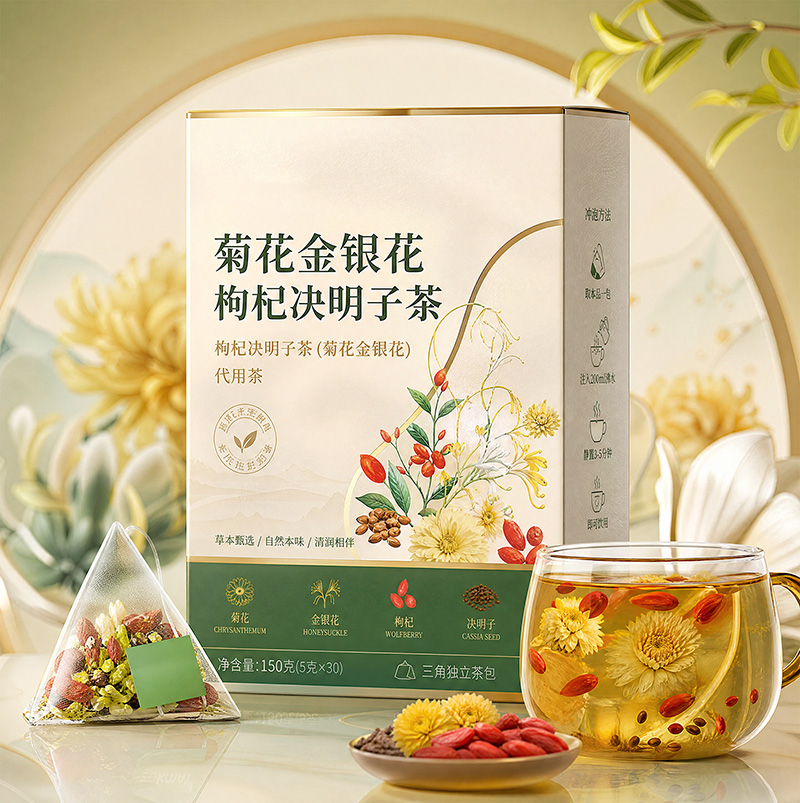
Stocking smooths price but creates inventory risk. Aroma compounds in flower materials decay with time, so a stocking horizon of twelve months is a sensible ceiling. Fruits are high in sugar, absorb moisture readily, and are prone to insect and mould problems, demanding tighter warehouse control. Roots are comparatively stable but still need watching for mould and sulphur residue. Sound practice is strict first-expiry-first-out rotation plus retesting of key parameters - moisture, microbiology, aroma and the principal active marker - for anything held beyond six months before it goes into production. When assessing a manufacturer, the warehouse is one of the most informative places to stand: temperature and humidity records, clearance from walls and floor, pest control, and legible batch identification together say most of what you need to know about raw material discipline.
6. What this means in practice
Controlling herbal tea input cost is a combination of measures rather than a single lever. Four are worth doing as standard. Ask the manufacturer, at formula freeze, for the origin, grade and market position of every major ingredient, so the money is traceable. Combine an annual price agreement with forward stocking on core products to get both stability and flexibility. Require validated substitution options for every critical material. And write acceptance criteria into the contract with sealed reference samples attached. Together these make input cost materially more predictable, and stop a single failed harvest from derailing an entire launch calendar.
Related Products
Grape Oolong Fruit Tea Blend | Pyramid Tea Bags Herbal Wellness Tea Custom OEM | Corn Silk Herbal Tea | Wellness Herbal Tea Private Label OEM Manufacturer
About Guangzhou Mesen Health Biotechnology Co., Ltd
Guangzhou Mesen Health Biotechnology Co., Ltd is located in the Huashan Science and Technology Park, Huadu District, Guangzhou. The company has focused on OEM and ODM services for the big health industry for nearly 20 years, operating dedicated research, production, sales and management centres, and maintaining long-term strategic partnerships with well-known Chinese medicine colleges and research institutions. Capabilities span pressed candy, gummies, capsules, solid beverages, herbal teas, plant beverages, protein powders, dietary supplements and enzyme jelly - from formulation development through contract manufacturing. For details on minimum order quantities, sampling lead times and quotations, see our manufacturing advantages and product range, or contact us for a tailored proposal.
Further Reading




