
Oral Liquid OEM Taste Design: Bitterness Blockers, Stevia Aftertaste and Flavour Systems
Oral liquids are the most honest format in the industry: the consumer decides within a second of tasting. There is a fact the trade rarely discusses openly: a substantial share of returns and negative reviews have nothing to do with efficacy and everything to do with taste. For everyday supplement products aimed at children, women and older consumers, flavour largely determines repeat purchase. Masking is harder here than in powders or gummies. There is no chewing to distract the palate and no thick confection matrix to trap an off-note; liquid spreads across the mouth almost instantly, so bitterness and astringency release all at once. That is why taste work routinely accounts for more than half the development effort on a liquid. On dietary supplement programmes we treat masking as a complete subsystem to be designed, not as a flavour added at the end.
1. Where bitterness and astringency come from
The first step is identifying the source, because the remedies differ completely. Inherent bitterness in the raw material is common with alkaloid-containing botanicals, certain peptides and amino acids such as branched-chain amino acids and arginine, and some B vitamins; this is mediated through bitter receptors and is the hardest to mask. Astringency is different in kind, arising when polyphenols bind salivary proteins and produce a drying sensation, typical of plant polyphenols, tea extracts and some fruit juice concentrates; sweetness only partly covers it. Metallic and fishy notes usually trace to minerals such as iron, zinc and magnesium, or to marine oil and collagen materials, and the metal ions then catalyse oxidation and further flavour damage. A fourth category is bitterness that appears later: components that were not bitter initially generating bitter compounds through oxidation, Maillard reactions or degradation during storage, which only surfaces in stability work. Classify first, then decide between masking, blocking and process removal.
2. Sweetener systems: sweeter is not better
Adding sweetness is the most direct lever and the easiest to overuse. For most liquids a sweetness equivalent of 8 to 12 percent sucrose is sufficient; beyond that, sweetness flattens the flavour profile and turns cloying at the back, which paradoxically amplifies any residual bitterness. The sweet-acid ratio matters more than the absolute level: at equal sweetness, raising perceived acidity makes the whole profile cleaner and helps considerably with bitter and astringent notes. In practice we set pH and acid perception with a citric and malic combination first, then tune sweetness back, not the other way round. For sugar-free systems, erythritol with stevia or monk fruit is standard, but stevia carries its own bitter tail, and that is especially visible in a liquid where nothing buffers the palate. The usual remedies are lowering the stevia share, moving to a high-purity Reb M fraction, or diluting the tail with erythritol. A small amount of salt can also suppress perception of specific bitter compounds, an almost free tool that is frequently overlooked.
3. Blockers and encapsulation
When sweetness and acid will not hold the bitterness down, dedicated tools are needed. Bitterness blockers interfere with receptor signalling and work at tens to a few hundred parts per million; their effectiveness varies widely between bitter compounds, so each case needs its own verification. Encapsulation, using cyclodextrin, modified starch or a gelatin gum arabic system, reduces release in the mouth and releases later in the gastrointestinal tract; beta-cyclodextrin inclusion works well for some small molecules, at the cost of formulation volume and some loss of clarity. Viscosity and suspension slow diffusion of tastants towards the taste buds and blunt the initial impact, using xanthan, carboxymethyl cellulose or pectin, kept below the level where the product reads as thick. Process removal, through activated carbon, macroporous resin or membrane separation, strips bitter fractions directly, though it can take actives with them, so content has to be compared before and after.
4. Flavour selection and the dosing window
Flavour is the final layer and the most frequently misused. A few rules hold. Choose a profile that fits the positioning and the inherent character of the material: citrus and berry notes mask most botanical off-notes well, while dairy and vanilla suit protein and collagen systems. Prefer water-soluble flavours, since emulsified versions can affect clarity and stability and need additional verification. Recognise that the same named flavour differs substantially between suppliers, so once a grade is locked in, do not switch casually. Dosing usually sits between 0.05 and 0.2 percent; above that the product starts to taste of flavouring, which reads as cheap. One practical detail: add flavour after volume make-up and below about 40 degrees Celsius, because high temperature strips the top notes. Check flavour interaction with the closure system too, since some aroma compounds are absorbed by plastic bottles or rubber liners and the aroma fades through shelf life; a compatibility trial settles it.
5. What changes through shelf life
Tasting well at trial is not the same as tasting well at expiry, and that is the most common trap in liquid masking. At least three things shift. Aroma fades, particularly the top notes, and faster under elevated storage, so the product smells fine at release and flat after six months. Maillard and oxidative changes introduce stewed and burnt-bitter notes in systems containing reducing sugars and amino acids, the same mechanism as the bitterness that appears later. And pH drifts where the buffer system is inadequate, altering perceived acidity and unbalancing the profile. Sensory assessment therefore belongs alongside analytical testing in both accelerated and real-time studies, not after them. Score at months zero, one, two, three and six, and where decay shows up, adjust the flavour ratio or improve the barrier of the pack.
6. Turning taste into an acceptance criterion
Taste is subjective but production needs an objective anchor. Three things make that possible. Retain reference samples of approved batches under refrigeration and compare later batches blind. Keep a fixed panel of five to eight people who, after light training, score bitterness, sweetness, acidity, aroma intensity and overall acceptability, using the mean and the spread rather than one person is verdict. And quantify the parameters that can be measured, pH, soluble solids, sweetness equivalence and viscosity, as routine checks on batch-to-batch consistency. Combined, whether it tastes good stops being an argument in a meeting and becomes something that can be judged, traced and explained to a customer.
Related Products
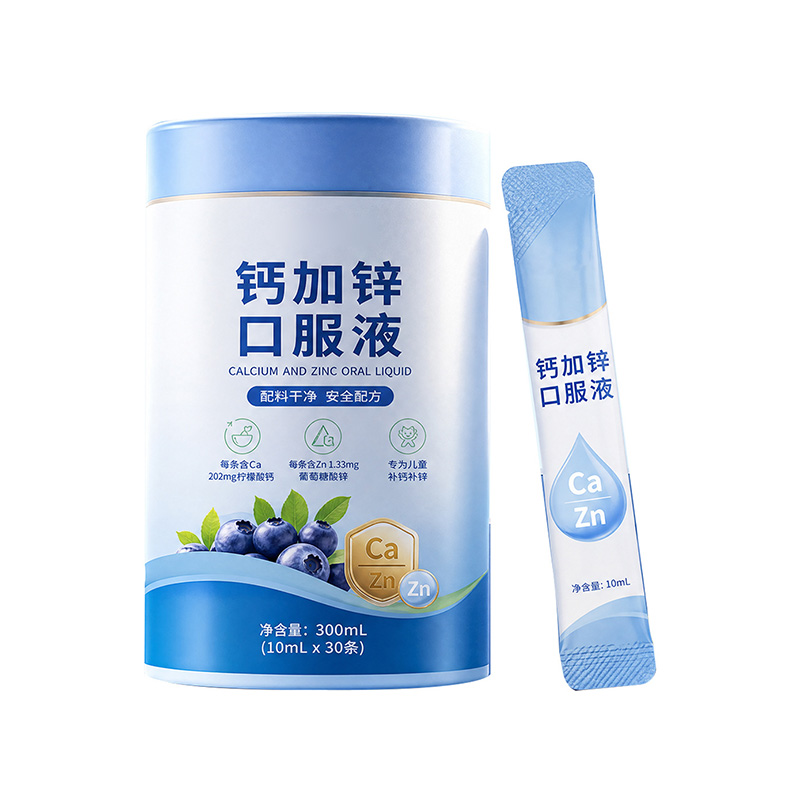
Calcium + Zinc Oral Liquid Blueberry Flavor | Zinc Gluconate Liquid Calcium Supplement for Kids OEM | Kids Liquid Calcium with High-Potency Vitamin K2 & D3 | Calcium Zinc Oral Liquid for Teens OEM
About Guangzhou Mesen Health Biotechnology Co., Ltd
Guangzhou Mesen Health Biotechnology Co., Ltd is located in the Huashan Science and Technology Park, Huadu District, Guangzhou. The company has focused on OEM and ODM services for the big health industry for nearly 20 years, operating dedicated research, production, sales and management centres, and maintaining long-term strategic partnerships with well-known Chinese medicine colleges and research institutions. Capabilities span pressed candy, gummies, capsules, solid beverages, herbal teas, plant beverages, protein powders, dietary supplements and enzyme jelly - from formulation development through contract manufacturing. For details on minimum order quantities, sampling lead times and quotations, see our manufacturing advantages and product range, or contact us for a tailored proposal.
Further Reading




