
Moisture and Mould Control in Herbal Tea OEM: Drying, Sealing and Shelf-Life Risk
Herbal tea is made from flowers, fruits, leaves and roots, which are naturally hygroscopic, and most products retain some of their original structure and porosity, so moisture management largely determines how they behave on shelf. Mould, caking, aroma loss and cloudy infusions can often be traced back to one common origin: moisture that was not controlled. In herbal tea OEM, moisture control is not achieved by the drying step alone; it runs as a continuous chain through raw material receipt, processing, cooling, packing and storage, and a weak link anywhere discounts the effort upstream. This article covers the relationship between moisture content and water activity, how to select a drying process, how to prevent moisture pick-up during cooling and packing, how to choose barrier materials, and how to verify mould risk across shelf life.

1. Moisture content is not water activity
Many teams treat moisture content as the single metric, when the more meaningful one is water activity. Moisture content is the total amount of water present; water activity is the fraction of that water available to microorganisms, and the relationship between the two is set by composition. Materials high in sugar or soluble solids bind water more tightly, so at the same moisture content their water activity is lower. Whether mould grows depends on water activity rather than moisture content: most moulds are clearly inhibited below about 0.6. Control should therefore run on both indicators, monitoring moisture content for process consistency and assessing water activity for microbiological risk. When setting an internal specification, measure water activity at several moisture levels to locate the safe band, then confirm the limit against taste and aroma performance rather than copying a figure from a comparable product.
2. Moisture checks at raw material receipt
Raw material is the first entry point for moisture risk. Botanical materials vary by lot depending on weather, stacking pressure and packaging during primary processing, transport and storage, so moisture must be a mandatory test at receipt with a defined rejection limit. One trap is the material that looks dry on the surface while the interior is still wet: sampling only from the top layer misleads, so layered or composite sampling is the right approach. Lots close to the upper limit should not go straight into production; they can be re-dried and retested. Storage after receipt matters just as much, with pallets kept off walls and floors, ventilation maintained, and attention to condensation on walls where temperature differentials occur. These steps look minor, but missing them multiplies the load on the dryer and makes uniformity hard to achieve.
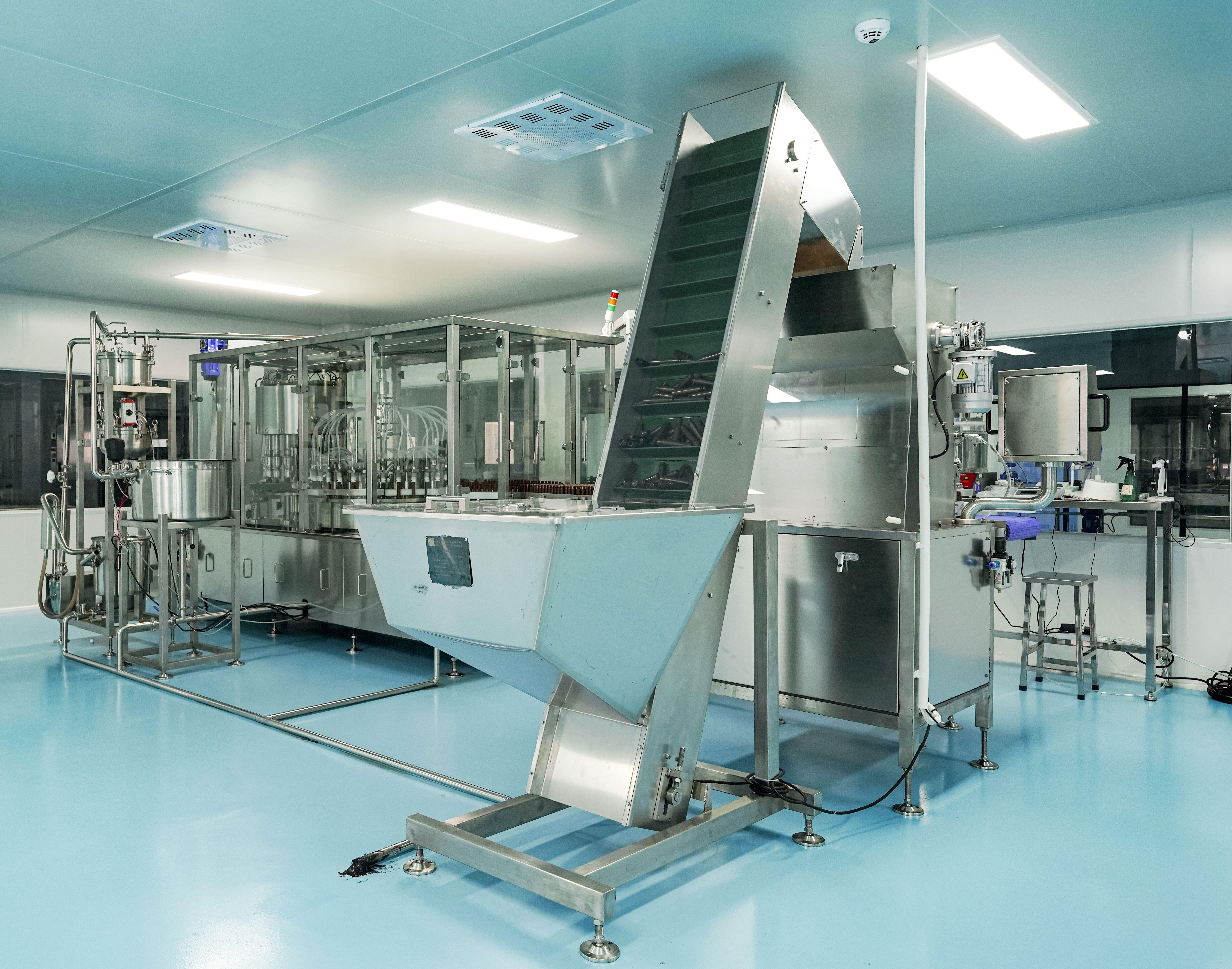
3. Choosing and controlling the drying process
Drying is the core operation, and the common options are hot air, microwave and vacuum freeze drying. Hot air is the most widely used, cheap and high capacity, but exposure is long and it affects heat-sensitive aroma and colour, with excessive temperature producing scorched notes and darkening. Microwave is fast and relatively uniform, with a useful insecticidal and antimicrobial effect, but it is sensitive to load thickness and distribution and can overheat locally if not controlled. Freeze drying preserves colour, shape and aroma best and suits premium positioning or products where appearance matters, at a significantly higher capital and energy cost. Whichever is used, what matters is the drying curve: higher temperature early to remove surface water quickly, then lower temperature to draw out bound water slowly, avoiding a hardened surface layer that seals moisture inside. The endpoint should be confirmed by measurement rather than a fixed cycle time.
4. Preventing moisture pick-up during cooling and packing
Material leaving the dryer is hot and dry, so the driving force for moisture uptake is at its strongest, and leaving it exposed to plant air for even a short period allows significant re-absorption. This is the most commonly overlooked risk point. The correct approach is to move to cooling immediately, but cooling must happen in a controlled environment that is low humidity, clean and separated from general production areas, not left to stand in an open workshop. Once cooled, material should be packed with minimal intermediate hold, in sealed containers under controlled humidity. Seal quality at packing is equally critical: insufficient heat seal temperature, pressure or dwell creates micro-leaks that are invisible to the eye yet admit moisture continuously through shelf life and cause localised mould. Seal integrity therefore needs routine sampling, by vacuum decay or a bubble test, with records retained as a standard quality control item.

5. Selecting barrier performance
The moisture barrier of the primary pack largely determines how stable the product stays. Among common materials, aluminium foil laminates give the best barrier to both moisture and oxygen and suit moisture-sensitive products with long shelf life; metallised films perform slightly below at lower cost; transparent plastic laminates allow the contents to be seen but offer limited barrier, so they need to be assessed against the target shelf life and sales environment. Selection should start from the water vapour transmission rate data for the film, combined with the internal moisture limit, pack size and intended shelf life, to estimate whether moisture will breach the specification within the period. Filter bag material matters too: nonwoven, corn fibre and nylon differ noticeably in permeability, and a highly permeable bag improves infusion while allowing more exchange with the environment, which makes the outer pouch barrier more important. Whether to add a desiccant should follow validation results rather than default practice, since desiccants add cost and require a do-not-eat statement.
6. Verifying mould risk across shelf life
Whether moisture control actually works can only be settled by shelf-life data. The standard programme has two parts. Stability testing places product under defined temperature and humidity and measures moisture, water activity, sensory attributes, infusion appearance and microbiology at intervals to observe trends. Microbiological monitoring tracks mould and total viable count over time, with particular attention to results after storage under hot and humid conditions. One point deserves emphasis: mould contamination is usually localised rather than uniformly distributed, so an undersized sampling plan misses it easily, and sample size and method need designing accordingly. Where mould has occurred before, trace back through raw material lots, production season and environmental records to see whether it correlates with a humid period, then reinforce the formula or packaging specifically. Accumulating this data turns an internal moisture limit from an empirical number into a justified one.
Related Products
Grape Oolong Fruit Tea Blend | Pyramid Tea Bags Herbal Wellness Tea Custom OEM | Corn Silk Herbal Tea | Wellness Herbal Tea Private Label OEM Manufacturer
About Guangzhou Mesen Health Biotechnology Co., Ltd
Guangzhou Mesen Health Biotechnology Co., Ltd is located in the Huashan Science and Technology Park, Huadu District, Guangzhou. The company has focused on OEM and ODM services for the big health industry for nearly 20 years, operating dedicated research, production, sales and management centres, and maintaining long-term strategic partnerships with well-known Chinese medicine colleges and research institutions. Capabilities span pressed candy, gummies, capsules, solid beverages, herbal teas, plant beverages, protein powders, dietary supplements and enzyme jelly - from formulation development through contract manufacturing. For details on minimum order quantities, sampling lead times and quotations, see our manufacturing advantages and product range, or contact us for a tailored proposal.
Further Reading




