
Herbal Tea OEM Raw Material Authenticity: Microscopy, TLC and Adulteration
Herbal teas are made from the leaves, flowers, fruit and roots of edible plants, processed for infusion. The category spans a wide range of materials from very different origins, and the same name often covers several species while the same species carries several names. In herbal tea OEM work, adulteration is the risk most easily overlooked and most costly when it lands. Visually similar materials can differ several-fold in price, and a substitution may not be obvious in flavour at first, while marker content, functional claims and the ingredient list all become inaccurate. When a regulator or a customer investigates, the liability ends up with both the brand owner and the manufacturer. This article works through the levels of identity testing, from basic sensory assessment to molecular methods, and sets out an incoming inspection system a factory can actually operate.
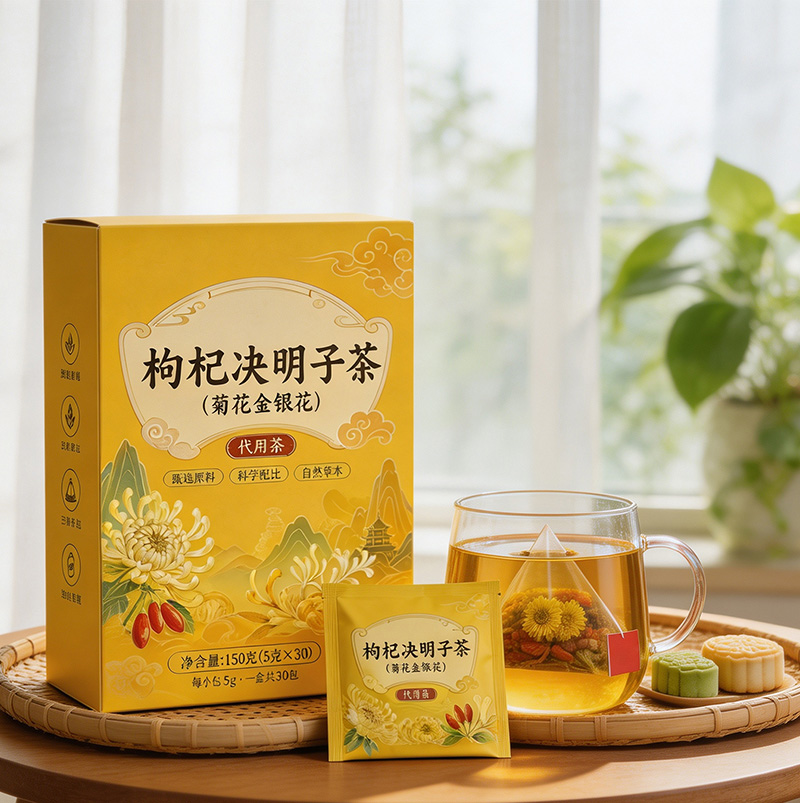
1. Why herbal tea materials invite adulteration
Three conditions drive the risk. First, physical similarity: many flowers and leaves look almost identical once dried, so different origins of chrysanthemum, different rose varieties, or wild versus cultivated honeysuckle cannot be told apart by eye after blending. Second, price spread: rare origins, wild-harvested material and narrow harvest windows can cost several times the ordinary grade, so blending in a proportion of cheap material delivers an immediate saving. Third, the absence of simple standardised methods for many materials, since published marker limits and reference chromatograms are scarce and a company often has to build its own. There is also adulteration at the preparation level: colourants added to brighten appearance, flavourings added to restore aroma, and sugar solutions sprayed on to add weight. None of these are species differences, yet all of them change analytical results and sensory performance directly.
2. Sensory assessment as the cheapest first screen
Sensory assessment needs no equipment but does need reference samples and trained staff. Appearance covers size, colour, integrity, foreign matter and signs of mould or insect damage. Aroma covers whether the dry note is natural and whether there is an unnaturally sweet or pungent smell, since materials dosed with flavouring are usually loud when dry but fade fast once infused. Liquor colour covers clarity and any abnormal turbidity or sediment. Taste covers whether the characteristic note of the material is present and whether there is odd bitterness or unexpected sweetness. For sensory screening to hold up, build a physical reference library: retain a standard sample per material by supplier and origin and refresh it periodically, comparing against the reference rather than against memory. Also convert key descriptors into a written checklist so different inspectors apply the same standard.
3. Microscopy and physicochemical indicators
Microscopy suits powdered material and the fractions of whole material that the eye cannot resolve. Every plant tissue has characteristic cellular features such as pollen grain morphology, epidermal cell patterning, stomatal type, and crystal or starch granule shapes. After preparing slides, the analyst can judge whether tissue fragments of another species are present. For material that has already been milled, microscopy is often the only route to a fast answer. Physicochemical indicators supply the quantitative side, with routine tests covering moisture, total ash, acid-insoluble ash, water-soluble extractives and alcohol-soluble extractives, while marker assays are set per material, for example volatile oil content, total flavonoids or specific glycosides. Marker content alone is not a verdict on identity, because dilution with a cheaper material of the same genus may simply lower the value, so physicochemical data belongs alongside sensory and microscopic findings.
4. Thin-layer chromatography and fingerprint profiles
Thin-layer chromatography is a low-cost, quick-to-adopt chromatographic method: after development and visualisation the plate yields a pattern of spots whose position and colour can be compared side by side with a reference material. Its strength is small capital outlay and low cost per test, which makes it a good incoming screen, while its weakness is limited resolving power for structurally similar compounds and poor quantitation. From there a high-performance liquid chromatographic fingerprint can be established, using a set of common peaks as an identity signature together with similarity scoring and content assays, which detects adulteration and origin differences with far greater sensitivity. Building a fingerprint library requires a large set of authentic samples, and this is exactly where a manufacturer and a brand owner can invest jointly: once the library exists, every incoming lot has a benchmark.

5. Molecular identification and origin tracing
DNA barcoding amplifies defined gene regions and sequences them for comparison against a reference database. It works especially well on material whose morphology has been destroyed, can separate very similar species and can detect adulterants at low proportions. Its limitations are higher equipment and cost thresholds, so it normally serves as confirmation for high-risk materials or disputed lots rather than routine screening. Stable isotope ratios and elemental fingerprints address origin, since carbon, nitrogen, hydrogen and oxygen isotope ratios and mineral element profiles differ between growing environments, allowing an assessment of whether material really comes from the claimed region. Both methods belong in the purchase contract as dispute-resolution mechanisms: agreeing in advance that a third-party molecular or isotopic result settles a dispute saves far more trouble than arguing about it afterwards.
6. Incoming inspection and supplier control
Turning methods into policy is what actually reduces risk. Four practices are recommended. First, define the inspection plan by material class: routine materials rest on sensory plus physicochemical testing, while high-value and high-risk materials add microscopy or chromatography, with the method and acceptance criteria written into the purchase contract. Second, introduce supplier grading and qualification, requiring certificates of origin, harvest information and third-party test reports, maintaining at least two approved suppliers for critical materials, and retaining a sample of every incoming lot for a defined period. Third, route any material change through a formal change control: a new origin, species or supplier requires re-validation of formula and stability, never an assumption that materials within a category are interchangeable. Fourth, trend the inspection data so that a supplier repeatedly showing low markers or signs of substitution triggers an audit or replacement. The paperwork looks heavy, but it costs far less than a single failed inspection or public complaint.
Related Products
Grape Oolong Fruit Tea Blend | Pyramid Tea Bags Herbal Wellness Tea Custom OEM | Corn Silk Herbal Tea | Wellness Herbal Tea Private Label OEM Manufacturer
About Guangzhou Mesen Health Biotechnology Co., Ltd
Guangzhou Mesen Health Biotechnology Co., Ltd is located in the Huashan Science and Technology Park, Huadu District, Guangzhou. The company has focused on OEM and ODM services for the big health industry for nearly 20 years, operating dedicated research, production, sales and management centres, and maintaining long-term strategic partnerships with well-known Chinese medicine colleges and research institutions. Capabilities span pressed candy, gummies, capsules, solid beverages, herbal teas, plant beverages, protein powders, dietary supplements and enzyme jelly - from formulation development through contract manufacturing. For details on minimum order quantities, sampling lead times and quotations, see our manufacturing advantages and product range, or contact us for a tailored proposal.
Further Reading




