
Pressed Candy OEM Transport and Storage: Moisture Barrier Packaging
In pressed candy contract manufacturing, the factory floor is the easy part. Temperature and humidity are logged, press parameters are validated, and the release testing passes. The difficult stretch begins once the goods leave the gate - road freight, ocean transit, port storage and a customer warehouse where nobody is watching. Sticking tablets, surface speckling, slower disintegration and even mould found at unpacking are frequently not manufacturing defects at all but the result of moisture cycling that develops slowly over weeks. Most damage claims a factory handles turn on a single question: was the acceptance standard agreed in writing before shipment? This article breaks the post-production phase into its component risks and explains how packaging should be selected.

1. Transport is a moisture cycle, not a constant climate
Stability chambers hold constant conditions; real transport does not. A container on a quay heats above fifty degrees Celsius during the day, then cools at night until moisture condenses on the cargo surface, and a voyage across climate zones repeats this cycle daily for three or four weeks. Tablets are porous, so repeated sorption and drying drives recrystallisation and localised swelling in the excipient system, showing up as speckles, frayed edges and lost hardness. The packaging interior compounds the problem, because cartons and leaflets absorb moisture first and then act as a moisture reservoir against the tablets. Risk assessment therefore cannot rely on average temperature. It has to consider how many cycles occur and how large the swings are, which is precisely why transport validation should use a cyclic profile rather than fixed conditions.
2. Three pathways by which moisture gets in
Knowing where water enters tells you where to place controls. The first pathway is the bottle neck. If the liner seal face is nicked, the cap torque is too low or the liner lacks resilience, vapour travels along the threads - the most common and most overlooked leak point in bottled products, and the first thing worth checking during a damage investigation. The second is the container wall itself. Plastic bottles and laminated foil pouches all have a water vapour transmission rate, and thin-wall PET under prolonged humidity transmits a meaningful amount, so material selection should be based on transmission data rather than wall thickness. The third is headspace. Moist air trapped at sealing will condense repeatedly on the tablet surface as temperature shifts, which is why nitrogen flushing or a desiccant is genuinely useful for hygroscopic formulas, provided the desiccant carries a clear warning so it is not swallowed.
3. Bottles, blisters or pouches - choose by product, not by unit price
Each format has a defined range of fit. A plastic bottle with desiccant suits products with many tablets per pack, moderate unit value and a long consumer use period: cost is low and filling is fast, but sealing depends entirely on the cap, and every remaining tablet is exposed after opening, so it favours small pack sizes and small single doses. Blisters isolate each tablet. Aluminium-plastic laminates are markedly better barriers than monolayer film, and all-aluminium blisters approach complete moisture protection, which suits very moisture-sensitive or truly portable products at the cost of higher material and tooling expense and machine limits on pack size. Pouches sit between the two and work well for trial sizes and gifts, but seal strength and puncture resistance must be validated carefully. The sensible order of decision is moisture sensitivity, then use scenario, then cost - not which format has the lowest piece price.
4. What credible packaging and transport validation looks like
Validation exists to expose risk, not to file paperwork. Three layers are usual. First, incoming confirmation of packaging materials, with transmission, seal integrity and torque data requested and spot-checked on receipt. Second, accelerated storage, holding the finished product at elevated temperature and humidity for two to four weeks and measuring moisture, hardness, disintegration time and appearance to find where the curve bends. Third, transport simulation, combining vibration and drop with stacking and humidity cycling to test structural integrity, watching specifically for loosened caps, cracked blisters and collapsed cartons. Where a matched batch can be shipped on a real route for comparison, the data is the most persuasive and can be handed directly to customers in support of packaging decisions.
5. Warehouse and stacking practices are routinely skipped
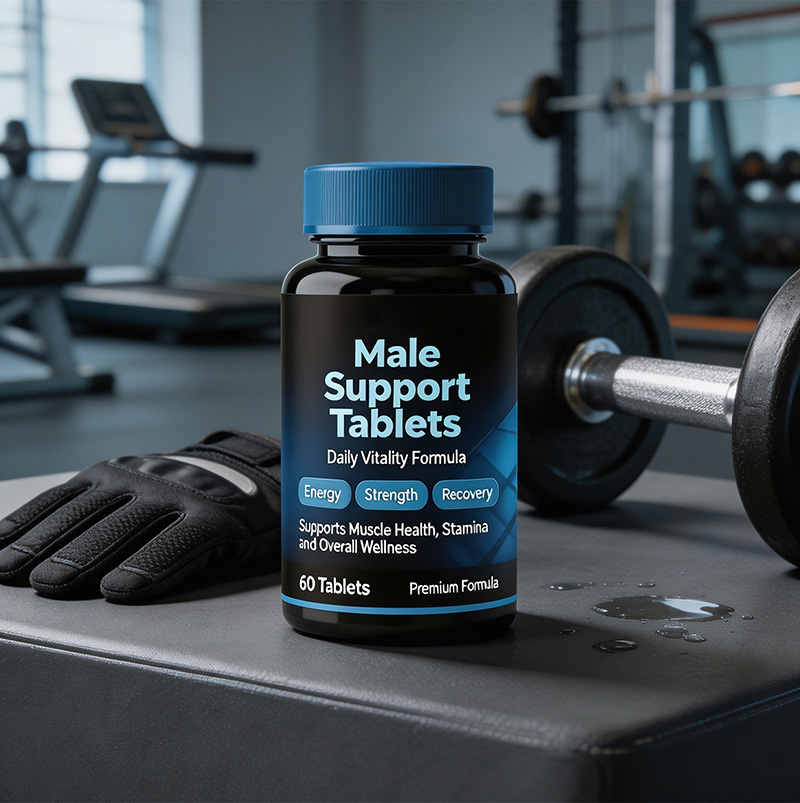
A factory cannot control a customer warehouse, but it can put requirements into the delivery documentation. Cool storage is preferable, prolonged high relative humidity should be avoided, goods should be kept off walls and floors rather than pressed against external walls or damp internal surfaces, stacking height should follow the compression strength of the carton rather than forklift convenience, and first-in-first-out has to be enforced through batch labels, otherwise the oldest pallets stay at the bottom until they expire. For batches already carrying moisture risk, shortening the shelf-life commitment or upgrading the packaging is a better answer than betting on warehouse conditions. Shipping a short storage and transport recommendation with the goods looks trivial until a claim arrives, at which point it saves a great deal of argument.
6. Put damage liability in the contract, not in the dispute
Every damage claim is fundamentally a standards question. Three things are worth writing down. State the release specification and which inspection report governs. State the delivery term and the point at which risk transfers, whether FOB, CIF or door-to-door. State the acceptance method and the objection window, covering sampling ratio on unpacking, retention sample requirements and how many days a claim may be raised. Insurance arrangements, in particular whether wetting and heating risks are covered on the ocean leg, should be explicit as well. The factory's job is to get the packaging and stability right and to keep the data complete; everything else needs to be aligned on paper beforehand.
Post-production risk is ultimately a packaging engineering problem and a contract problem at the same time. Choose the format correctly, validate honestly and define responsibility clearly, and the odds of a tablet reaching its shelf life in good condition improve considerably.
Related Products
Glycerol diester coffee OEM OEM OEM OEM OEM meal replacement coffee MCT live broadcast same solid beverage source manufacturer | GLP-1 Semaglutide Satiety & Fat Blocker Tablets | Custom Pressed Candy OEM Manufacturing
About Guangzhou Mesen Health Biotechnology Co., Ltd
Guangzhou Mesen Health Biotechnology Co., Ltd is located in the Huashan Science and Technology Park, Huadu District, Guangzhou. The company has focused on OEM and ODM services for the big health industry for nearly 20 years, operating dedicated research, production, sales and management centres, and maintaining long-term strategic partnerships with well-known Chinese medicine colleges and research institutions. Capabilities span pressed candy, gummies, capsules, solid beverages, herbal teas, plant beverages, protein powders, dietary supplements and enzyme jelly - from formulation development through contract manufacturing. For details on minimum order quantities, sampling lead times and quotations, see our manufacturing advantages and product range, or contact us for a tailored proposal.
Further Reading




