
Plant Beverage OEM: Brix Control and Sugar-Acid Ratio Balance
When people assess a plant beverage they mention sweetness and acidity, but what actually decides whether it drinks well is the ratio between the two. Raise Brix slightly and drop acidity half a point and a crisp drink turns heavy; raise acidity and a rounded mouthfeel sharpens into something aggressive. In plant beverage contract manufacturing, the sugar-acid ratio and soluble solids are among the few parameters that can be measured quickly with an instrument and that map directly onto sensory experience, which makes them worth controlling carefully. This article covers how the ratio is established, how solids are measured, how batch variation is managed, and how mouthfeel is rebuilt after sugar reduction.
1. The ratio is not a fixed number
It is tempting to treat the sugar-acid ratio as a specification to be copied, but it is really a set of relationships bound to the product positioning and the base material. For high-juice products, the natural balance of the raw material should dominate; depart far from it and the drink tastes artificial. For products built on botanical extracts or floral infusions, where the base is mild, the ratio is more flexible and can be used to create either a bright or a restrained character. Drinking occasion matters as well - with a meal, after exercise or as a leisure drink all imply different levels of sweetness and acidity. The sensible sequence is to measure the Brix and total acidity of the base, calculate the sugar and acid needed to reach the target flavour curve, then confirm by sensory evaluation. Calculated ratios are a starting point for validation, not a finished standard.
2. Practical points on measuring Brix
Soluble solids are usually read refractometrically, which is simple but has preconditions. Temperature compensation comes first: readings shift with temperature, so use an instrument with compensation or apply the standard conversion. Sample preparation is second: pulpy products must be mixed thoroughly and filtered, otherwise the reading is unrepresentative. Timing is third: measure after blending, before homogenisation and before filling, which localises any concentration change to a specific step. A common mistake in production is treating Brix as the only concentration marker and ignoring acidity. The two should be recorded as a pair, because dilution and concentration moves shift them by different amounts, and only together do they show whether the formula has drifted.
3. Compensating for raw material variation
Plant materials vary naturally between lots: the same fruit or vegetable differs in sugar and acid with origin, season and ripeness. A frozen recipe therefore tends to be adjusted on the fly in real production. The mature approach is to publish adjustment rules in the process document rather than relying on operator judgement. Typical rules: measure Brix and total acidity of the incoming material, calculate the sugar and acid additions from a conversion formula, allow adjustment within a defined band, and escalate anything beyond it to technical approval. Retain a sample of every batch and record actual inputs and adjustments. After a period, the data shows which materials fluctuate most seasonally, allowing flexibility to be designed into purchasing or formulation in advance. That accumulated data does more for consistency than any amount of end-of-line sorting.
4. Controlling batch-to-batch consistency
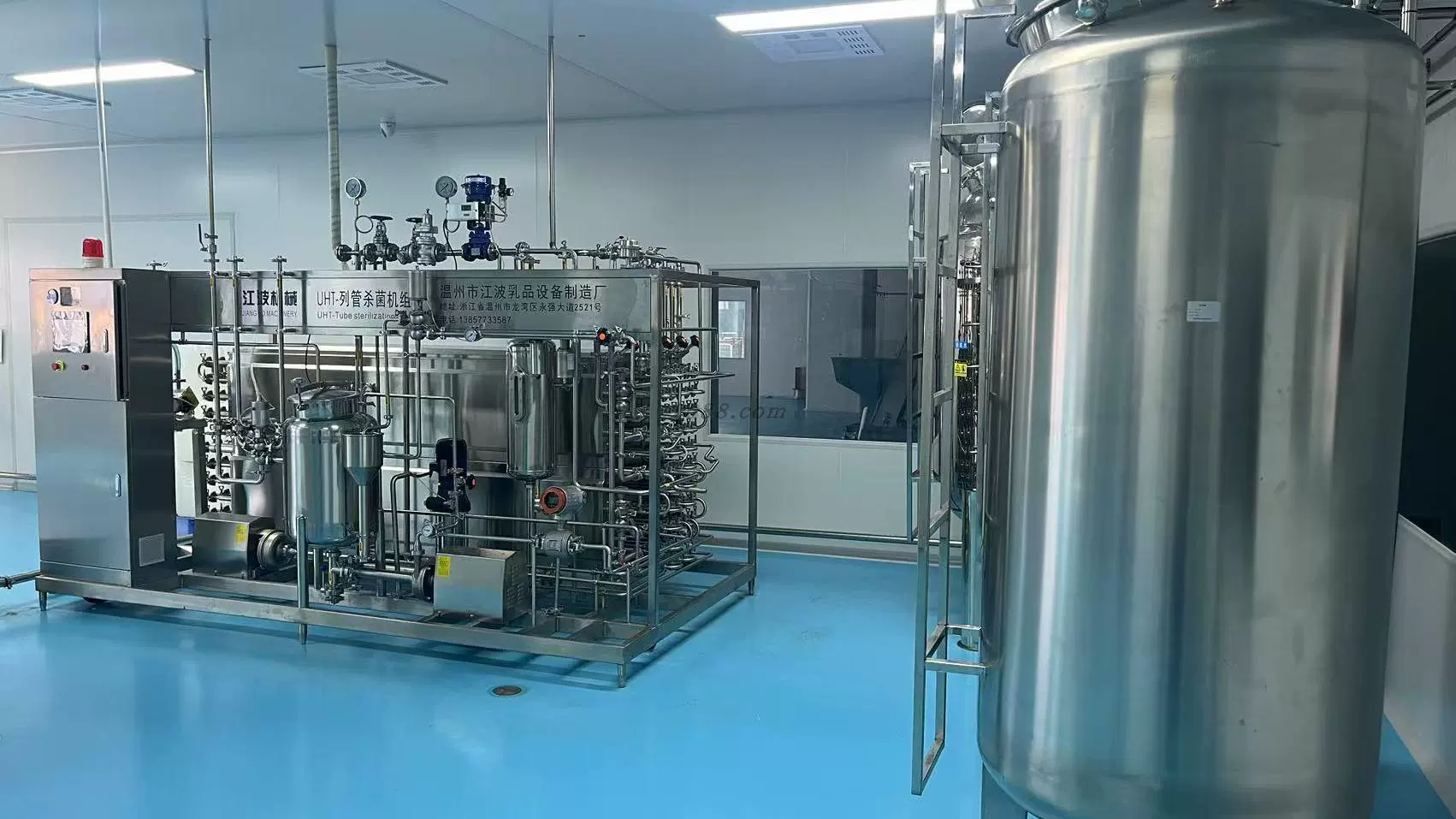
Beyond raw materials, the process itself creates variation: order of addition, mixing time, homogenisation pressure and sterilisation conditions. If sugar and acid go in at different stages, localised low pH can flocculate proteins or hydrocolloids, and the reconstituted mouthfeel differs accordingly. Process documents should therefore specify addition order - normally dissolve sugars and water-soluble stabilisers first, then add acid or acidic concentrate, to avoid localised low pH. Sterilisation temperature and time affect flavour too; aroma compounds in plant beverages are lost noticeably under prolonged heat, and what tastes like a sweetness difference is sometimes an aroma difference. Consistency relies on three routines: a retained sample from every batch, periodic comparative review, and trend charts for the critical parameters.
5. Rebuilding mouthfeel after sugar reduction
Sugar reduction is the most common reformulation request of recent years. Sugar supplies more than sweetness: it contributes body, mouthfeel and buffering against acidity, so removing it leaves a watery drink with abrupt sourness. Several tools rebuild the structure. High-intensity sweeteners can approach the sweetness level, though onset speed and aftertaste need attention and usually a blend. Body-building ingredients such as dietary fibre, certain polysaccharides or a modest juice content give the liquid thickness in the mouth. Rebalancing the acid system - replacing sharp acids with softer ones - reduces the clash between sourness and a thin body. Trace salt or specific flavour compounds add depth. These approaches work in combination and need repeated evaluation; a single sweetener rarely delivers the result on its own.
6. Put the ratio into release decisions
Brix and total acidity belong in routine finished product testing and release judgement, with defined limits and a clear path when they fall outside. Sensory evaluation should remain the final confirmation, because an instrumentally compliant drink with an off-note is not uncommon. For OEM work there is an extra benefit: when a customer asks for a taste adjustment, historical data lets the factory tell quickly whether the issue is the sugar-acid balance or the aroma system, and propose a justified change rather than another trial. That responsiveness is itself a competitive advantage for a contract manufacturer.
The sugar-acid ratio looks like two numbers, but behind them sit raw materials, process, testing and sensory evaluation working together. Manage Brix and acidity as a pair and design for raw material variation as normal, and consistency in plant beverages becomes genuinely achievable.
Related Products
Milk Thistle, Kudzu & Turmeric Beverage with Sea Buckthorn Puree & Honey | Herbal Oral Liquid OEM | Liquid Fruit & Vegetable Salad Fiber Drink | Dietary Fiber Meal Replacement Vegetable Juice Beverage OEM
About Guangzhou Mesen Health Biotechnology Co., Ltd
Guangzhou Mesen Health Biotechnology Co., Ltd is located in the Huashan Science and Technology Park, Huadu District, Guangzhou. The company has focused on OEM and ODM services for the big health industry for nearly 20 years, operating dedicated research, production, sales and management centres, and maintaining long-term strategic partnerships with well-known Chinese medicine colleges and research institutions. Capabilities span pressed candy, gummies, capsules, solid beverages, herbal teas, plant beverages, protein powders, dietary supplements and enzyme jelly - from formulation development through contract manufacturing. For details on minimum order quantities, sampling lead times and quotations, see our manufacturing advantages and product range, or contact us for a tailored proposal.
Further Reading




