
Suspension Oral Liquids in OEM: Suspending Agents, Sedimentation, Redispersion
A significant share of products in dietary supplement oral liquid contract manufacturing cannot be made as clear solutions. The reasons are practical: some functional ingredients are insoluble or poorly soluble, including certain botanical extracts, fat-soluble vitamins, minerals and fruit material. Building them into a suspension oral liquid is a viable route, but a harder one than a solution. A solution only has to control pH and preservation; a suspension also has to control sedimentation, redispersion, viscosity and how the system changes after sterilisation. This article covers how to choose a suspending agent, how to judge the two key metrics, and the risks most easily overlooked in production.
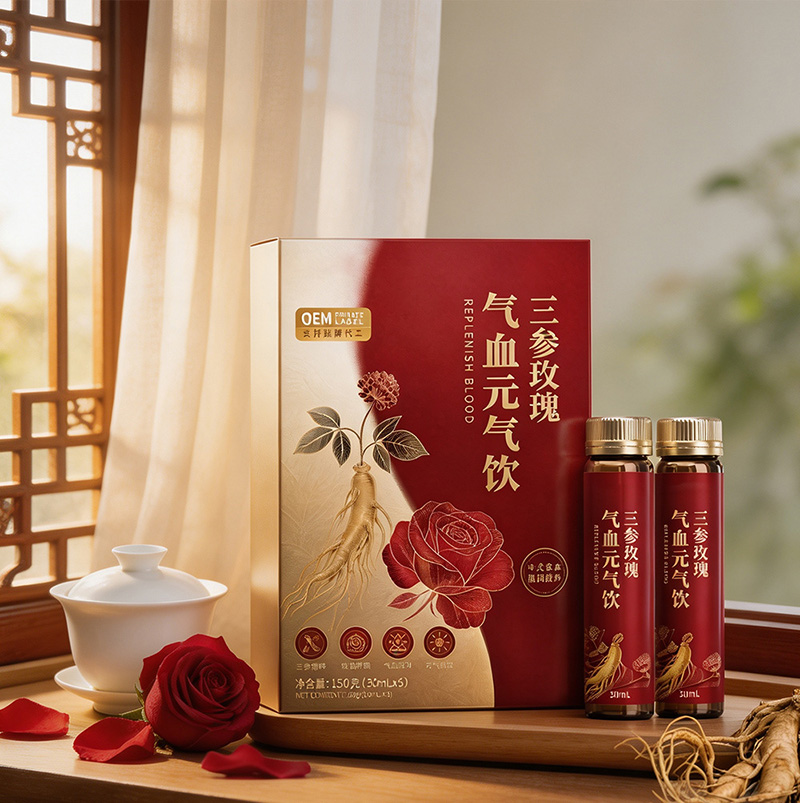
When a suspension is the right answer
First establish whether it is necessary. If the target ingredient can be brought into clear solution by adjusting pH, adding a solubiliser or switching to a more soluble raw material form, a solution is normally preferable, because stability risk is lower and consumer acceptance higher. Only a few situations justify a suspension: an ingredient is genuinely insoluble with no alternative form, for instance certain botanical extracts; suspended particles carry flavour or visual value, as with fruit pulp; or components interact and cannot be co-dissolved. The test is simple - suspension is the last option, not the first. Once the decision is made, characterise particle size, density and surface properties, because these are the input data for choosing a suspending agent.
Choosing the suspending agent
Suspending agents work by raising liquid-phase viscosity and forming a network that slows particle settling. The main families each have their own character. Xanthan gum thickens efficiently, tolerates acid and salt, and shows clear pseudoplastic behaviour, making it the general-purpose first choice, though high use levels read as slimy. Sodium carboxymethyl cellulose is inexpensive with a lighter mouthfeel but is sensitive to ionic strength. A microcrystalline cellulose and CMC blend forms a thixotropic gel network that locks particles in a three-dimensional structure at rest and performs particularly well in suspension oral liquids. Gellan gum forms a weak gel network at very low use levels and suits products needing a clean mouthfeel. Pectin and carrageenan serve specific textural briefs. Real formulas are usually blends, combining different gelling mechanisms to balance suspension capacity against mouthfeel.

Two core metrics: sedimentation volume ratio and redispersion
Two metrics describe a suspension. The sedimentation volume ratio is the settled volume after standing divided by the initial volume; closer to one means a more stable system, with no pronounced compression of the sediment. Measure it under standard conditions at intervals and plot the change over time rather than taking a single reading. Redispersion is how easily the product returns to a uniform state on shaking, and it directly determines the consumer experience. Even when settling is unavoidable, a product that reshakes gently is acceptable. The classic failure of poor redispersion is a hard cake at the bottom of the bottle that will not move. Read the two together: fast settling with easy redispersion is more practical than slow settling that ends in a cake.
Process: dispersion, homogenisation, deaeration and sterilisation
A suspension runs a longer process chain than a solution. The suspending agent must be fully hydrated, usually requiring high-shear dispersion; incomplete hydration creates lumps that appear later as sediment. Insoluble components need wet milling or high-shear dispersion to bring particle size into a suitable band - too coarse settles quickly, too fine aggregates. Homogenisation may be needed to tighten the size distribution. Deaeration cannot be skipped: entrained air in a suspension causes inaccurate fill volumes, dripping at the neck and a poor appearance. Most critically, heat treatment during sterilisation degrades some suspending agents, lowers viscosity and can cause particle aggregation or destroy the gel network, so sterilisation conditions must be validated while the formula is being fixed, not left until production.
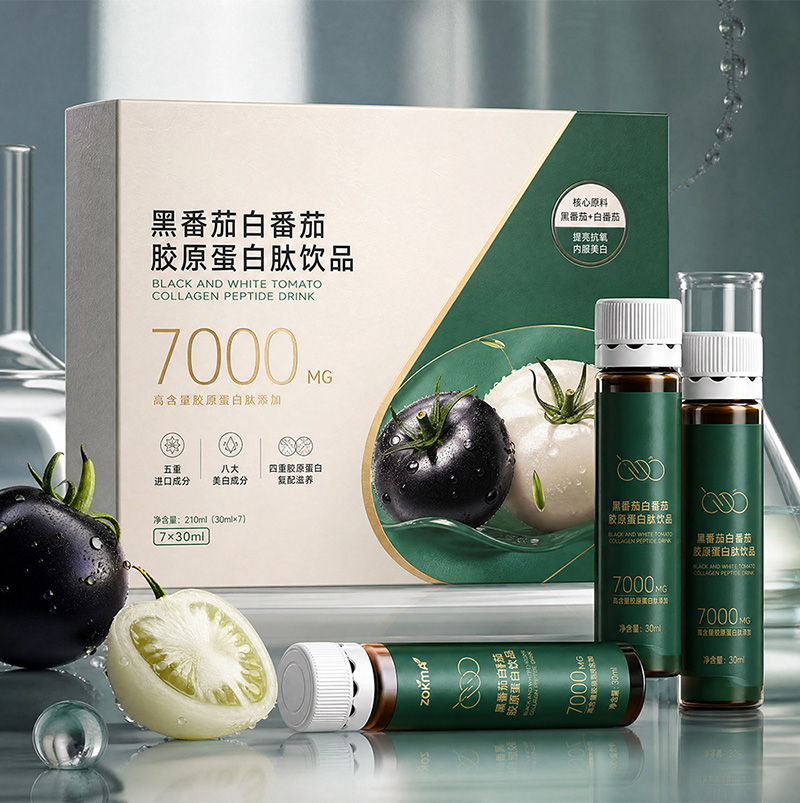
Common problems and where to look
Separation and rapid settling: check particle size first, then whether the suspending agent level is adequate and properly hydrated, then whether the pack experienced high temperatures after filling. Hard caking at the bottom usually involves particles that are too dense, an insufficient suspending network or excessive standing time; raising yield value or switching to a thixotropic system helps. Residue on the bottle wall and at the neck relates to viscosity and filling method, and calls for adjusting fill temperature and nozzle design. A slimy mouthfeel means the agent level is too high or the wrong grade was chosen; blending allows lower levels of each component. Also watch preservative distribution in a suspension, since particles can adsorb preservative and reduce the effective concentration, which requires dedicated preservative efficacy testing.
How far verification should go
Suspension products need at least four verification studies: a sedimentation volume ratio curve covering early, mid and late shelf life; a redispersion test, ideally with an agreed number of shakes as a quantitative criterion rather than a subjective impression; accelerated testing plus freeze-thaw cycling, watching how alternating high and low temperature affects the system, which matters greatly for products shipped into wide temperature ranges; and microbiological and preservative efficacy testing to confirm that particle adsorption does not weaken preservation. Complete these and the formula and process are genuinely fixed. Buyers evaluating samples should also look at these dimensions, not just the appearance immediately after shaking.
The difficulty with a suspension oral liquid is not how many ingredients sit on the formula sheet, but whether the system holds an acceptable appearance and reshaking feel across the whole shelf life. Choose the right suspending system, control particle size, and validate the sterilisation effect up front - then the product both fills properly and stands up to time.
Related Products
Calcium + Zinc Oral Liquid Blueberry Flavor | Zinc Gluconate Liquid Calcium Supplement for Kids OEM | Kids Liquid Calcium with High-Potency Vitamin K2 & D3 | Calcium Zinc Oral Liquid for Teens OEM
About Guangzhou Mesen Health Biotechnology Co., Ltd
Guangzhou Mesen Health Biotechnology Co., Ltd is located in the Huashan Science and Technology Park, Huadu District, Guangzhou. The company has focused on OEM and ODM services for the big health industry for nearly 20 years, operating dedicated research, production, sales and management centres, and maintaining long-term strategic partnerships with well-known Chinese medicine colleges and research institutions. Capabilities span pressed candy, gummies, capsules, solid beverages, herbal teas, plant beverages, protein powders, dietary supplements and enzyme jelly - from formulation development through contract manufacturing. For details on minimum order quantities, sampling lead times and quotations, see our manufacturing advantages and product range, or contact us for a tailored proposal.
Further Reading




