
Colour Consistency in Pressed Candy OEM: Pigments, Blending and Batch Shade
In pressed candy contract manufacturing, colour is the first thing a customer sees and one of the easiest attributes to lose control of at scale. Put batch one next to batch three of the same formula and the difference is visible. The cause is rarely the pigment on its own. It is how the pigment is dispersed, what carrier it is dispersed in, and what blending and compression do to the material afterwards. Tablets are formed dry, with no water acting as a dispersion medium, so a pigment cluster that forms before compression will not be broken up by the press. It shows up as speckling on the face or as a whole-batch shade shift. This article walks through colorant classes, selection logic, colouring routes, batch shade judging and a fault-finding order.
Three families of colorant
Colorants in pressed candy generally fall into three groups. Synthetic colours and their lakes are the workhorses of tablet production: stable hue, high tinting strength, predictable cost. A lake is an insoluble pigment formed by binding a dye to a carrier, which makes it markedly better than the soluble form against light and heat. Natural colours - caramel, carmine, turmeric, copper chlorophyllin, anthocyanins - carry a clear marketing story but are weaker on light, heat and acid resistance, and batch-to-batch hue consistency is harder to hold, so they need a wider tolerance. The third group is intrinsic colour from ingredients such as cocoa, matcha, spirulina or fruit and vegetable powders. These colour and flavour at the same time, which supports the claim on pack, but they are duller, weaker and needed in far larger amounts. The first selection question is not which colour, but whether the product is selling a clean label or a stable appearance. The two routes barely overlap.
Lake or soluble dye?
Four criteria decide it. First, the matrix: where the formula carries free moisture or acidic excipients, soluble dyes migrate and bleed, and lakes hold far better. Second, process temperature: compression itself does not heat the material, but granulation and drying upstream do, which favours lakes. Third, uniformity: a lake is an insoluble particle, so it can only be dispersed. Coarse or agglomerated lake particles become visible specks on the tablet face. A soluble dye can be dissolved and added with the binder in a wet granulation, giving better uniformity, but that ties you to a wet route. Fourth, regulatory scope: permitted lists for synthetic and natural colours differ substantially between markets, so for export work confirm the permitted substances and limits before the formula is frozen rather than after the samples are approved.
Three colouring routes
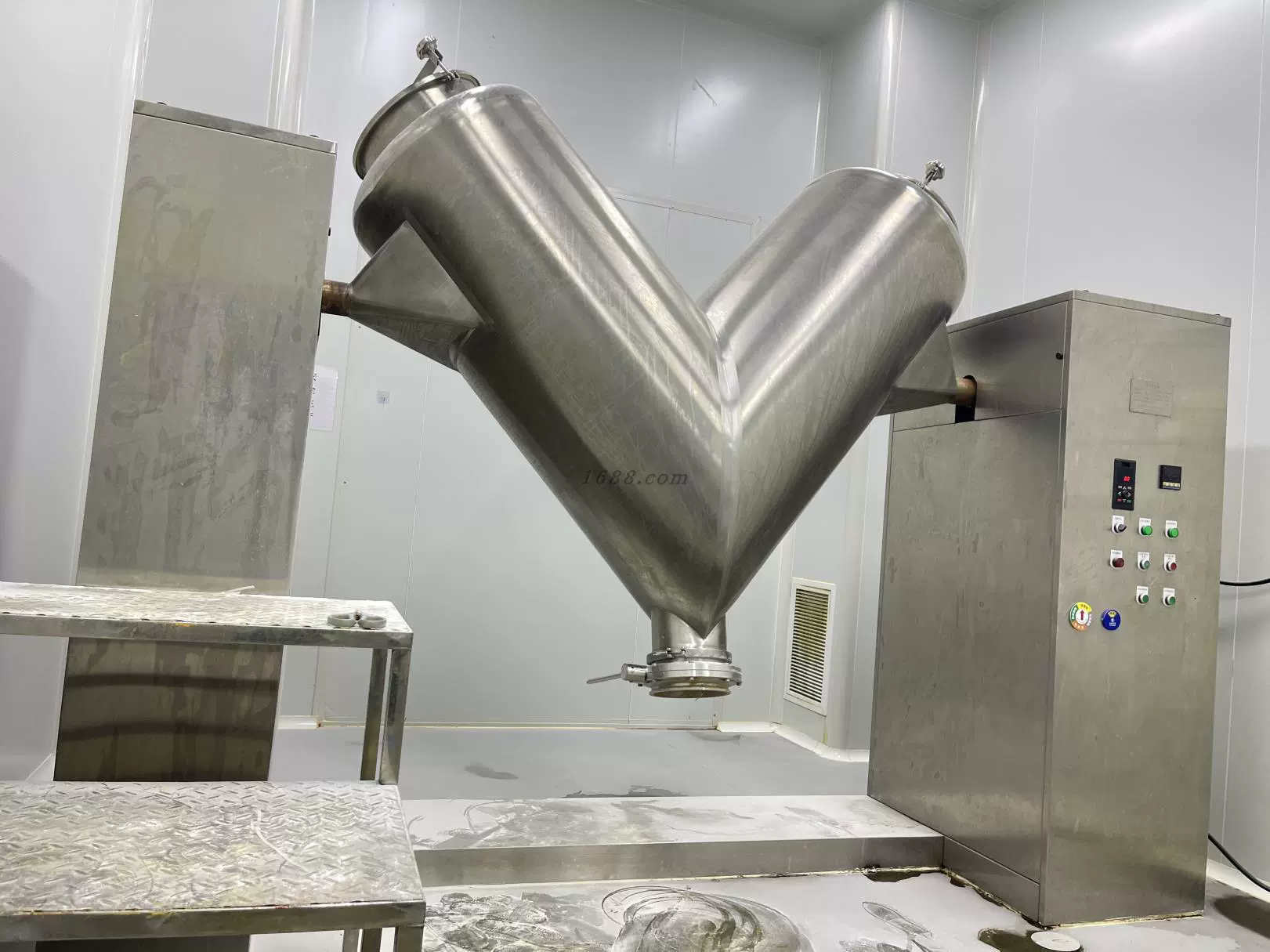
The route sets how controllable the shade will be. Wet colouring dissolves or disperses the colorant into the binder solution and adds it during granulation. Dispersion is even and the shade is consistent, but the material must then be dried, which costs heat-sensitive colours. Dry blending premixes the colorant with a portion of excipient, dilutes it, then blends with the main mass. It suits lakes and direct compression, and the dilution ratio and blending time must be validated rather than assumed. Coating puts the colour in the film layer, leaving the core free of heavy colorant loading. The shade is the most even and the brightest, at the cost of an extra process step and weight-gain control. None of the three is inherently better. Match the route to the order pattern: small volumes across many shades suit coating, large single-shade volumes suit wet colouring, and direct compression suits dry blending with a validated premix.
Blend uniformity is the first lever
Many colour complaints trace back to blending. A colorant is usually dosed at a few parts per thousand or less, which makes it a minor component, and dumping it straight into the main blender invites localised concentration. The standard approach is two-stage: premix the colorant with an equal or multiple quantity of carrier first, then blend with the main mass, with a defined time, speed and fill level. Longer is not better. Over-blending causes segregation where densities differ, which is exactly the case when a lake meets a polyol. Validate by sampling at different positions and depths in the blender and measuring shade or content, then set the blending time from the relative standard deviation rather than from habit.
Judging and releasing batch shade
Shade has to be quantified or every disagreement becomes an opinion. Establish two references: a physical standard and an instrument baseline. Keep the physical standard in a light-tight container, replace it on a fixed cycle and keep the records. For the instrument baseline, read L, a and b values on a colourimeter and set an internal ceiling on total colour difference, plus a tighter limit for within-batch uniformity. Judge within-batch first, then batch-to-batch. A batch that is uneven inside points to process and blending; a batch that is uniform but shifted points to raw material lot, ratio or weighing. Write the release rule down: inside the limit, release; above the limit but inside a watch band, confirm jointly with quality and marketing; beyond the watch band, rework or downgrade.
Fault-finding order when shade drifts
A fixed sequence saves the most time. Start with weighing and batching records, since minor components are the commonest source of error and omission. Then check the colorant lot: hue can shift between suppliers and even between lots from one supplier, so retain an incoming sample and build a hue baseline. Third, confirm whether blending or granulation parameters were adjusted ad hoc. Fourth, inspect press and tooling condition, because a rough or fouled punch face leaves marks and colour patches on the tablet. Only then consider swapping the colorant or adjusting the dose. Fixing the order makes the investigation traceable and lets the same problem be closed on the second occurrence without repeating the whole search.
Colour is really a visible reading of process stability. Choose colorants on the balance of compliance and stability, match the colouring route to the order pattern, validate the premix and blend, and release against a measured reference. Do those four things and batch shade stops depending on luck and becomes an indicator you can measure, trace and stop before it reaches the customer.
Related Products
Glycerol diester coffee OEM OEM OEM OEM OEM meal replacement coffee MCT live broadcast same solid beverage source manufacturer | GLP-1 Semaglutide Satiety & Fat Blocker Tablets | Custom Pressed Candy OEM Manufacturing
About Guangzhou Mesen Health Biotechnology Co., Ltd
Guangzhou Mesen Health Biotechnology Co., Ltd is located in the Huashan Science and Technology Park, Huadu District, Guangzhou. The company has focused on OEM and ODM services for the big health industry for nearly 20 years, operating dedicated research, production, sales and management centres, and maintaining long-term strategic partnerships with well-known Chinese medicine colleges and research institutions. Capabilities span pressed candy, gummies, capsules, solid beverages, herbal teas, plant beverages, protein powders, dietary supplements and enzyme jelly - from formulation development through contract manufacturing. For details on minimum order quantities, sampling lead times and quotations, see our manufacturing advantages and product range, or contact us for a tailored proposal.
Further Reading




