
Solid Beverage OEM Release Testing: Moisture, Microbiology, Fill Variation and Solubility
Powdered drink mixes look like the simplest format in the category - a powder you stir into water, no complex forming step. That apparent simplicity is exactly why quality control is so often underspecified: contracts get signed saying the product shall meet the national standard, and only at shipment does it emerge that the two parties meant entirely different things by "acceptable". Release testing rests on five groups of criteria - moisture, microbiology, fill variation, solubility and sensory - each with its own source standard, sampling rule and failure modes. This article follows the sequence a contract manufacturer actually runs, setting out for each check where the limit comes from, how to sample, how to judge the result and what usually causes a failure.
Moisture: the most common cause of failure
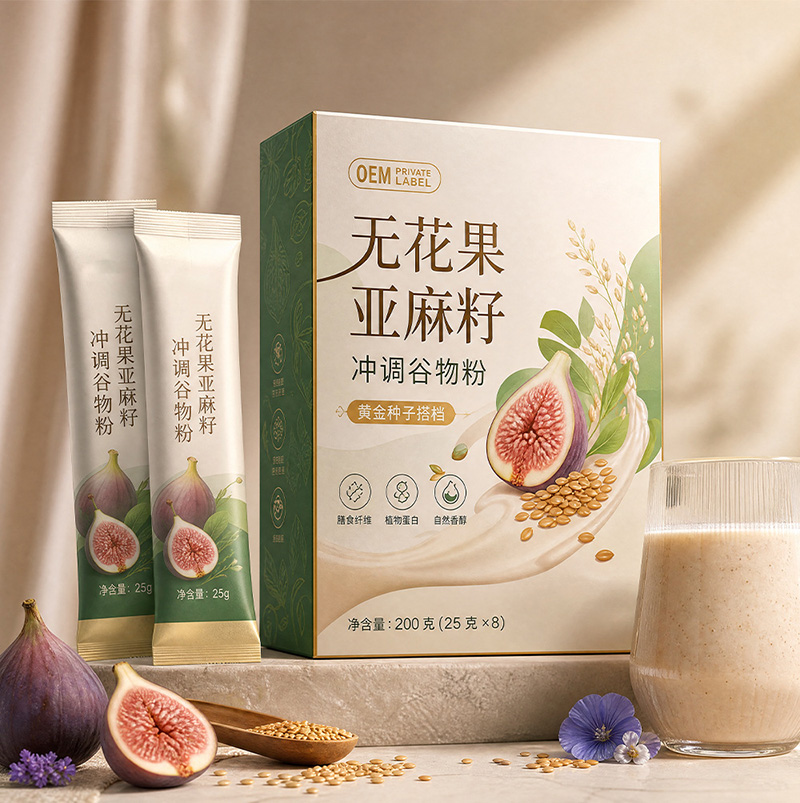
Moisture is the single biggest variable in the shelf stability of a powder. elevated moisture sets off caking, microbial growth and flavour degradation. Finished product moisture is conventionally held between three and five percent. Formulations high in sugar or fruit juice powder tolerate up to five or six percent, while products containing probiotics or enzymes must go below three percent, because live cultures are acutely sensitive to water activity.
On method, plants typically use either loss-on-drying at 105 degrees to constant weight or a rapid moisture analyser. The two disagree systematically by roughly 0.2 to 0.5 percentage points, so release testing should commit to one and state it. There is also a sampling trap: taking the sample only from the top of the silo. Powder segregates during handling and a moisture gradient develops across the container, so proper practice is to sample the top, middle and bottom layers and composite them before testing.
It is worth separating moisture content from water activity, because what governs microbial growth is Aw, not total moisture: at the same five percent moisture, a high-sugar formulation may sit at an Aw of 0.3 because the sugar binds the water, while a low-sugar one is already at 0.5. For high-value or long shelf-life products, specify Aw directly and hold it below 0.4.
Microbiology: how the three-class plan works
Microbiological criteria follow the applicable national food safety standard for the product category. Routine monitoring covers aerobic plate count, coliforms and mould, with pathogens - Salmonella and Staphylococcus aureus - added for certain formulations. Judgement uses a three-class sampling plan: of n samples, c may fall between m and M, and none may exceed M. The design tolerates random process variation while holding a zero-tolerance line against systematic contamination.
Three sources account for most exceedances. Raw materials: botanical extracts, fruit juice powders and protein ingredients can carry a high inherent load, so the control point belongs at goods-in. Equipment hygiene: dead legs in blenders, sifters and fillers that are wet-cleaned and not dried before the next charge become a culture medium. Packing environment: dust generated during filling settles on the seal area, compromising seal integrity and introducing secondary contamination.
Fill variation: net content and per-sachet deviation are different tests
Fill control operates on two levels. The batch average net content may not fall below the declared quantity, and individual sachet deviations must stay within tolerance. Prepacked goods regulations set a specific tolerable negative error for individual units while also requiring that the average actual quantity of the batch is not below the declared net content. This is routinely misread as "no sachet may be under the label claim". In fact, regulation permits a limited number of individual negatives but no systematic underweighting.
Fill accuracy is governed by powder flow - angle of repose and compressibility - by the filling principle - auger, volumetric cup or weigh-filling - and by dust and static. Sugar-rich and fat-containing powders flow poorly and bridge in an auger, producing low and variable fills; high-fines formulations build static and adhere to the filling head, so fill weight decays over the run. Hold the packing room between forty-five and fifty-five percent relative humidity and clean filling heads on a fixed schedule.
Solubility: the first thing the consumer notices
Solubility - or reconstitution behaviour - has no single mandatory standard, and it is the attribute a consumer judges first and complains about most often. Industry practice evaluates it by adding a fixed quantity of powder to water at a fixed temperature and timing complete dissolution or dispersion, by standing the preparation and looking for lumps, separation or sediment, and by filtering to check for insoluble residue.
Poor solubility has three usual roots. Granulation was wrong - particles too fine or too coarse, or insufficient binder solution producing a dense granule. The raw material is intrinsically poorly soluble, as with some botanical extracts and insoluble dietary fibres. Or the hydrocolloid in the formulation was mis-selected. Fast-dissolving products are typically fixed by granulating to a larger particle size, adding a small quantity of a carrier such as maltodextrin, or pre-treating difficult raw materials through micronisation, encapsulation or granulation. The evaluation method has to be written down at sample stage, because otherwise the argument at volume production is always "the factory says it passes" against "the brand says it does not".
Sensory and pack integrity: the checks most often skipped
Sensory covers colour, odour, taste and physical state. It looks subjective but is quantifiable against a retained reference standard: compare each batch to the sealed reference and reject outside the agreed band. For formulations containing fruit or botanical powders, batch-to-batch colour difference is the most frequent failure, and it originates in raw material variation rather than process drift.
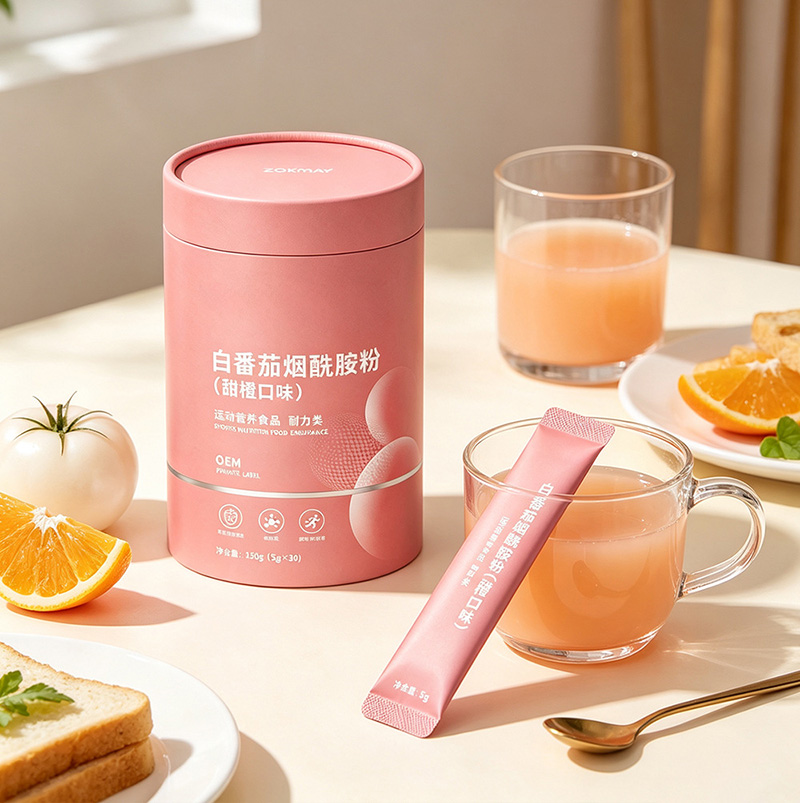
On pack integrity, foil and metallised laminates need a seal integrity test - vacuum decay or the water bubble method - and seal strength needs a peel test. Stick packs and shaped sachets fail most often at the corners, where the seal is weak; that is a mismatch of the three machine variables, temperature, pressure and dwell. Transit simulation - drop, stack and vibration - matters especially for export orders, because a surprising share of "damaged on arrival" complaints trace back to a packaging decision made months earlier.
What a complete release record contains
Assembled, a solid beverage release record should carry: product identity and batch number, production and sampling dates, moisture or water activity result, microbiological results and judgement, net content data including the mean and individual extremes, solubility test record, sensory comparison conclusion, seal integrity and seal strength results, and the signatures of the analyst and reviewer. Omit any one of these and the document will not support a liability determination when a dispute arises.
For a brand owner, specifying "issue a release report against the above items for every batch" is worth far more than a clause that says "complies with the national standard". When assessing a solid beverage OEM partner, ask for a sample release report from a previous batch and count how many of these items it covers.
Related Products
White Kidney Bean Black Coffee Latte Powder | Instant Keto Enzyme Coffee Solid Beverage OEM Private Label | Protein Berry Meal Replacement Shake Powder | Satiety Smoothie Solid Beverage Custom OEM
About Guangzhou Mesen Health Biotechnology Co., Ltd
Guangzhou Mesen Health Biotechnology Co., Ltd is located in the Huashan Science and Technology Park, Huadu District, Guangzhou. The company has focused on OEM and ODM services for the big health industry for nearly 20 years, operating dedicated research, production, sales and management centres, and maintaining long-term strategic partnerships with well-known Chinese medicine colleges and research institutions. Capabilities span pressed candy, gummies, capsules, solid beverages, herbal teas, plant beverages, protein powders, dietary supplements and enzyme jelly - from formulation development through contract manufacturing. For details on minimum order quantities, sampling lead times and quotations, see our manufacturing advantages and product range, or contact us for a tailored proposal.
Further Reading




