
Ambient Long-Life Plant Beverages in OEM: UHT, Aseptic Cold Filling and Shelf Life
Two bottles of plant beverage can differ completely: one requires cold chain throughout and lasts days, the other sits at room temperature for over six months. The difference is not the recipe but the combination of sterilisation and filling. Achieving ambient shelf life means bringing commercially sterile product and a sterile container together inside one closed environment, and if any link is weak the shelf life collapses from months back to days. This article covers, from the manufacturing side, the two main routes used in plant beverage OEM, the parameter logic behind ultra-high temperature treatment, the critical controls in aseptic cold filling, pack sterilisation and cleanroom maintenance, and how shelf life is designed. The investment is significant, but the distribution options it opens are worth it.
1. The essential difference between the two routes
Two routes deliver ambient stability. The first fills and seals the product and then sterilises it in pack, commonly called retorting, which needs modest capital but demands heat-resistant packaging such as glass or high-temperature plastics. Its drawback is the long thermal exposure inside the container, which costs colour, flavour and heat-sensitive actives and often leaves a cooked note. The second sterilises the product first by ultra-high temperature treatment, cools it, and fills it into pre-sterilised containers inside a sterile environment, which is aseptic cold filling. Thermal exposure is far shorter, so flavour and nutrients survive better, but capital cost, environmental control and operational discipline are all far more demanding. Neither route is universally better; the choice follows product positioning, budget and target shelf life.
2. The parameter logic of UHT treatment
UHT trades a higher temperature for a shorter time, reaching equivalent microbial kill with less thermal damage. The temperature and time combination is calculated against the resistance of the target organisms, with commercial sterility as the benchmark. Direct heating injects steam into the product for extremely fast heating but adds condensate, so flash cooling and de-aeration follow. Indirect heating through plate or tubular exchangers adds no water and heats slightly more slowly, suiting viscous or particulate products better. After the heating section the product passes through a holding tube, where length and flow rate set the true residence time, and this is the parameter that must be calculated accurately. Cooling afterwards should be rapid to limit further damage. Above all, the process must run steadily, because any flow fluctuation changes the delivered lethality.
3. Critical controls in aseptic cold filling
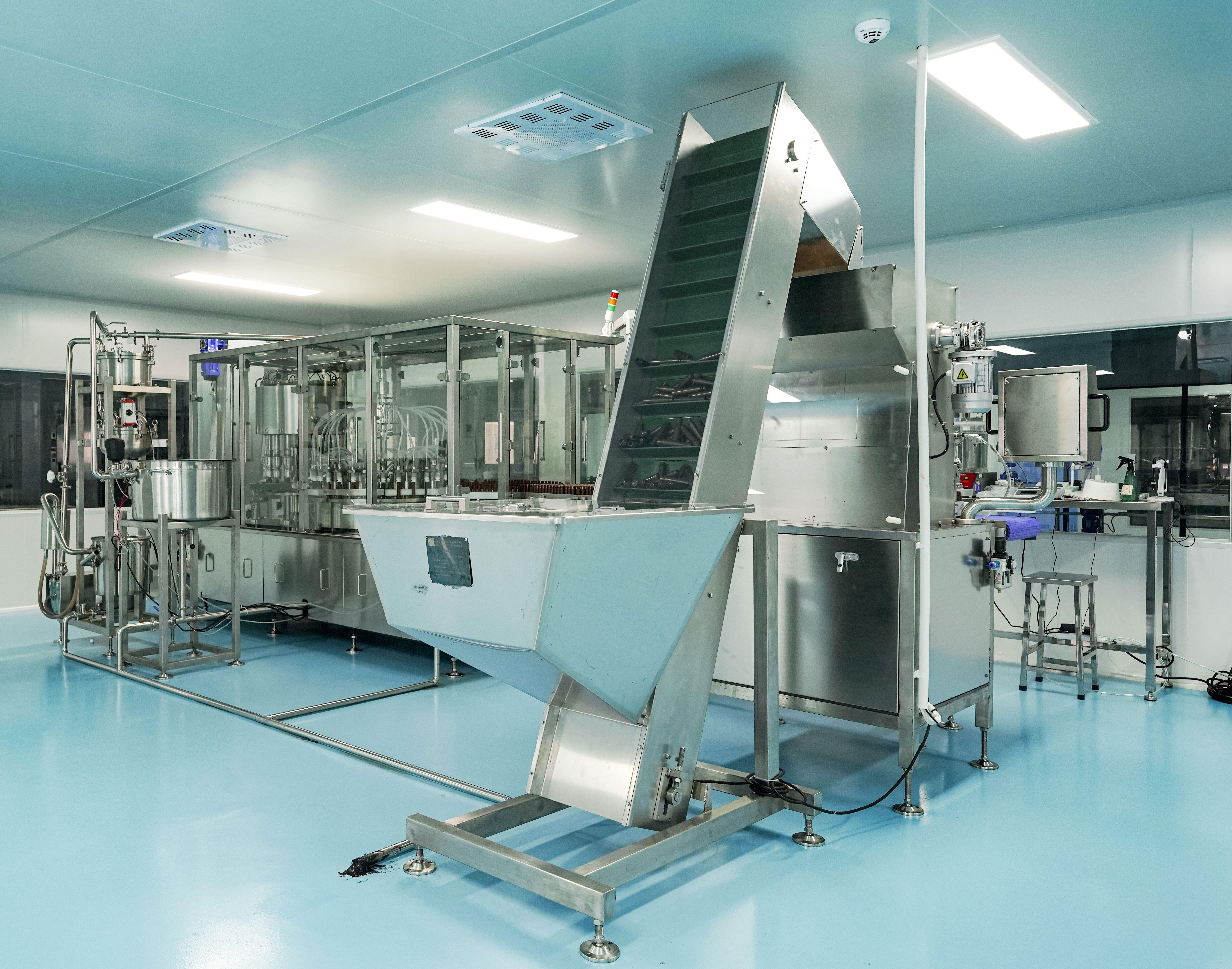
Filling is where earlier work is either preserved or lost. On the product side, sterile product travels through sterile piping that requires validated cleaning and sterilisation in place before each run and prompt cleaning afterwards, since residues lead to biofilm. The filling valve is the core component: its geometry determines how cleanable and sterilisable it is, and valve seat seals need scheduled inspection and replacement. On the environment side, the filling zone is held under positive pressure with HEPA-filtered air, and personnel and material transfer follow defined procedures. On the container side, bottles or cartons are sterilised before entering the zone, typically by hydrogen peroxide dip or spray with hot air drying, or by other means, with efficacy validated and residues monitored. These elements look independent but form one chain whose weakest link sets the level.
4. Validation and routine monitoring
Reliability is established by validation and maintained by monitoring. Before production, equipment and process qualification covers temperature distribution, confirmation of sterilisation efficacy in the piping system, pack sterilisation efficacy and residue testing, plus media fill trials. Media fill is the closest simulation available: sterile growth medium replaces product for a continuous run, units are incubated and the contamination rate is counted, and an acceptable result is what demonstrates the system can deliver sterility assurance. Routine monitoring then records critical parameters continuously with alarms, covering sterilisation temperature, holding time, zone differential pressure, filter integrity and peroxide concentration and residue. Finished product incubation and microbiological testing provide final confirmation. Data should be reviewed periodically so trends are caught early rather than after a failure.
5. Designing the shelf life
Ambient stability is not unlimited, and shelf life has to be grounded in evidence. Contributing factors include the physical and chemical stability of the product itself, such as sedimentation and separation in protein-rich plant drinks, colour drift, and flavour deterioration from fat oxidation, plus the barrier properties of the pack, since light and oxygen transmission accelerate degradation and amber bottles or high-barrier materials are used for sensitive products. Verification normally combines accelerated studies for rapid screening with real-time studies for final confirmation. The declared shelf life should carry margin rather than sitting exactly at the limit. Real distribution conditions matter too, since summer warehousing and long-distance transport often exceed design temperatures, so compression strength and seal integrity have to match.
6. Practical guidance for brand owners
Before committing to an ambient product, clarify a few points. First, channel requirements: ambient capability is close to essential for e-commerce and room-temperature retail, while a business serving local chilled distribution may find an aseptic line hard to justify. Second, flavour expectations, because the cooked note from retorting is pronounced in some categories, particularly soy and cereal drinks, and the two routes should be tasted side by side. Third, pack format, since aseptic filling constrains bottle shape and material, and distinctive shapes or premium materials raise cost sharply. Fourth, order volume, because the cleaning and sterilisation cycle is long and small runs carry high unit cost, so the route suits reasonably sized orders. Fifth, choose a manufacturer with genuine aseptic experience and ask for media fill records and finished product incubation results, which tell you more than a plant tour.
Related Products
Milk Thistle, Kudzu & Turmeric Beverage with Sea Buckthorn Puree & Honey | Herbal Oral Liquid OEM | Liquid Fruit & Vegetable Salad Fiber Drink | Dietary Fiber Meal Replacement Vegetable Juice Beverage OEM
About Guangzhou Mesen Health Biotechnology Co., Ltd
Guangzhou Mesen Health Biotechnology Co., Ltd is located in the Huashan Science and Technology Park, Huadu District, Guangzhou. The company has focused on OEM and ODM services for the big health industry for nearly 20 years, operating dedicated research, production, sales and management centres, and maintaining long-term strategic partnerships with well-known Chinese medicine colleges and research institutions. Capabilities span pressed candy, gummies, capsules, solid beverages, herbal teas, plant beverages, protein powders, dietary supplements and enzyme jelly - from formulation development through contract manufacturing. For details on minimum order quantities, sampling lead times and quotations, see our manufacturing advantages and product range, or contact us for a tailored proposal.
Further Reading




